
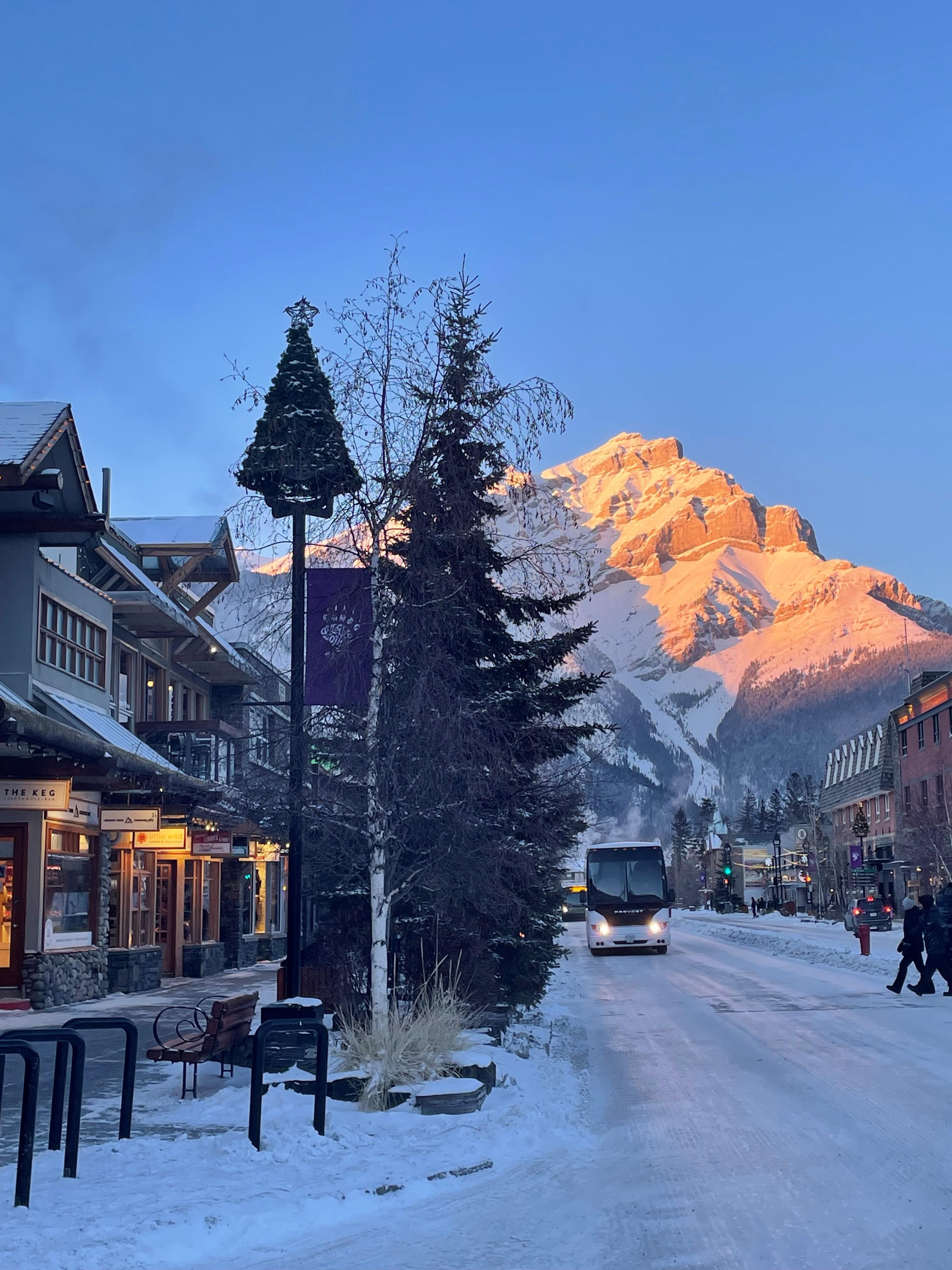
 Photo · Banff Advisor
Fall and winter in Banff
October to March is Banff at its quietest and, on the right day, its best. Short days, big snow, patios that move indoors by the fire. Here's how to plan around the cold and get the most out of the season.
All times in this guide are Alberta Time (UTC-6).
If summer Banff is about 16½ hours of daylight at the solstice and a townsite running past capacity, fall and winter Banff is the opposite: sunset before 6 PM, half the crowds, and a town that finally feels like it belongs to the people in it. The trade is real — some roads close, some trails need spikes or skis, and –25°C mornings happen — but the reward is a Banff you can actually park in, book a table in, and still catch live music in most nights of the week.
Done right, a Banff winter day has a rhythm to it too: first chair or a frozen-lake walk in the morning, après in the afternoon, a fireplace and a pint by dark — repeat. This guide covers both halves: the logistics that get you out there, and the question actually worth planning around — where to go to warm up once you've earned it.
The road situation
Winter flips the summer problem. Parking in the townsite is easy from November to mid-December and again after SnowDays; the challenge moves to the roads themselves. Four rules to internalize:
- 01Moraine Lake is closed. Not shuttle-only — closed. Moraine Lake Road shuts to all traffic the Tuesday after Thanksgiving (October 13 in 2026) and doesn't reopen until June 1. The road crosses serious avalanche terrain. Don't plan around it, and don't trust a photo-sharing app that says otherwise.
- 02Lake Louise is drive-up again. The Parks Canada shuttle wraps up in mid-October and the upper lot goes back to first-come. On weekends and holidays it typically fills by mid-morning, so go early or take Roam's 8X from Banff. Winter tires (M+S minimum) are a legal requirement in Banff National Park from November 1 to April 1 on Highway 93, the Bow Valley Parkway and Moraine Lake Road, and strongly advised everywhere else.
- 03The Bow Valley Parkway (1A) is the winter scenic route. It stays open to vehicles through the winter and is the better drive to Johnston Canyon. From March 1 to June 25 the eastern 17 km has an overnight travel restriction (8 PM – 8 AM), so check Parks Canada's closures page before you go.
- 04Ski-hill parking is free but finite. On a typical powder weekend Sunshine's lot is full by around 9 AM and Lake Louise's by around 9:30. All three hills run free shuttles from Banff hotels and the Train Station Lot. Use them — your car won't start any faster in the cold at the end of the day anyway. And for getting home after dinner: there's no Uber or Lyft in Banff, so call Banff Taxi on 403-762-0000.
The clock quirk
Alberta stopped changing its clocks. From November 1, 2026 the province stays on UTC-6 year-round — "Alberta Time" — so there's no fall-back this winter, and the evenings run an hour later on the clock than older guides say. Three things follow:
- →The BC day trips stay on the same clock. BC is making the same move, so Golden, Radium, Invermere, Fernie and Emerald Lake run on the same time as Banff this winter. No zone change at the divide, and nothing to adjust for a lunch booking in Golden.
- →Saskatchewan matches Alberta year-round, so nothing changes if you're driving in from the east.
- →Double-check phone and calendar times after November 1. Anything entered before the change may have shifted by an hour.
What's open when
Fall (October – November)
- → Larch season peaks in the last week of September and the first week of October. Larch Valley needs the Moraine Lake shuttle while it still runs; after the road closes, go to Healy Pass instead, or Ptarmigan Cirque in Kananaskis at Highwood Pass (Highway 40 closes December 1).
- → Hiking trails: everything close to town — Tunnel Mountain, Sulphur, Cascade Amphitheatre, C-Level Cirque — stays walkable into November, but carry microspikes from mid-October. High passes hold snow by Thanksgiving.
- → Banff Gondola stays open year-round; the Norquay sightseeing chairlift closes for the season in mid-October.
- → Lake Minnewanka boat cruises wrap up in early-to-mid October.
- → Ski hills: all three SkiBig3 hills target early November (Lake Louise opens November 6, 2026); the order varies by year, and opening day is often a weekday with a couple of runs and a lot of enthusiasm.
- → Banff Centre Mountain Film and Book Festival runs October 31 – November 8 — the busiest, most interesting week of the fall.
- → Roam Transit drops to its winter schedule in mid-October; the 8X to Lake Louise keeps running.
Winter (December – March)
- → Everything on snow is open. Three ski hills, cross-country at the Banff Springs golf course loop and Cascade Valley, fat biking on the Legacy Trail, and skating wherever the ice is thick enough.
- → Lake Louise skating rink is cleared and lit from mid-December, conditions permitting, through late February. The Ice Magic sculptures go up in front of the Chateau in early February — see below for who can get in.
- → Johnston Canyon becomes an ice walk from mid-December. Microspikes are not optional; they're rentable in town for $15–18 a day.
- → Upper Hot Springs runs year-round and is at its best when it's snowing sideways.
- → Sunset is 5:37 PM at the solstice, and sunrise around 9:40 AM. A full ski day still works — last chair now falls well before dark. An after-dinner hike does not.
- → SnowDays Festival (January 21 – February 7, 2027): snow sculptures on Bear Street, the Play Zone in Central Park, and the Art of Ice live carving competition downtown (February 5–7). The Banff side is free, mostly outdoors, and the only time winter Banff gets properly busy. Ice Magic at Lake Louise (February 3–7) is different: in 2027 it is an exhibition of finished sculptures, ticketed, and limited to guests of participating Lake Louise hotels and eligible local residents (ticket plus shuttle).
- → Christmas and New Year's are the other exception — the week of December 24 to January 2 books out like a long weekend in July.
- → The shoulder weeks — early December and mid-February through March — are the quiet, cheap, excellent part. March skiing is the local secret: long days, soft snow, nobody around.
The winter hits, ranked by crowd-tolerance required
- 01Lake Louise skating rink on a sunny Saturday in January: Everyone's here, half of them on rental skates for the first time. Magical anyway. Go first thing, before the sun clears the ridge, or after dark under the lights.
- 02Banff Avenue during SnowDays: Bear Street is pedestrian-only and packed. Lean in — it's the one week the whole town shows up.
- 03Johnston Canyon ice walk: The winter Johnston Canyon, which is to say everyone does it. Weekday mornings are near-empty; weekend afternoons are a single-file shuffle.
- 04Sunshine Village on a powder day: The lot fills, the gondola queue builds, and then it all spreads across 3,300 acres and you barely see anyone past 10 AM.
- 05Vermilion Lakes at sunrise, Two Jack frozen over, Cascade Ponds: Same spots as summer, a tenth of the people, and the light is better.
Ski. Beer. Fireplace. Repeat.
There are plenty of great apps for snow reports and trail conditions — we're not trying to replace them. This guide answers the more useful question: where do you go for a cold beer, a hot drink, or live music once you've earned it? Here are the three hills and three classic winter walks close to town, each one never more than a few minutes from somewhere warm.
Mt. Norquay → Downtown Banff
The day: Banff's local hill, ten minutes from Banff Avenue. Small, steep, no lines, and the only one of the three with night skiing (Fridays and Saturdays, January to March). The right call for a half day, a first day, or a day when the big hills are a zoo.
After: You're back on Banff Avenue before your boots are off. Catch a happy hour, find a fireplace, or see who's playing that night.
Banff Sunshine Village → Downtown Banff
The day: The biggest snow in the park, the longest season (mid-November to late May), and three mountains straddling the Continental Divide. Ride the gondola up from the base lot; the GOAT Club at Goat's Eye Lodge is the on-hill après if you don't want to wait.
After: It's 20 minutes back to town, or 15 on the free shuttle. On a typical day last chair is mid-afternoon, well before dark now — head straight down and you've beaten the dinner rush to every fireplace in Banff.
Lake Louise Ski Resort → Lake Louise or Banff
The day: The most terrain in the Rockies, the best views from a chairlift anywhere, and the back bowls when they open. The Top of the World chair is being upgraded for 2026–27 and Richardson's Ridge keeps opening up more of the mountain.
After: Lake Louise village has a handful of options and the Chateau has the fireplaces. Most people make the 45-minute drive back to Banff for the full evening.
Johnston Canyon ice walk → Banff via the 1A
The walk: The summer waterfall trail, frozen. Catwalks over the canyon, blue ice at the Lower Falls, and a frozen wall of it at the Upper Falls. Microspikes required; a guided tour gets you helmets and the stories.
After: Thirty minutes back to Banff on the Bow Valley Parkway. Watch for elk.
Tunnel Mountain in snow → Downtown Banff
The walk: Same summit as summer, half the people, and the switchbacks packed hard enough that microspikes turn it into a 90-minute loop. The best bang-for-effort view of a snowed-in townsite there is.
After: You're on Banff Avenue in five minutes. This is the one to do before a late lunch.
Lake Louise lakeshore and skating → Lake Louise
The walk: The flat 4 km lakeshore loop, then skates on the cleared rink in front of the Chateau. Rentals are at the Chateau Mountain Sports shop. Go late afternoon so you catch the lights come on.
After: Hot chocolate at the Chateau is the move. For a real meal and a pint, it's back to Banff.
Pick your hill or your walk, then let Banff Advisor handle the after. Check tonight's happy hours and live music before you leave the lot — so the fireplace is already sorted by the time you're down.
Where to spend a long winter evening
Banff's après scene is the underappreciated joy of winter here. Dark by six, a dozen fireplaces, and live music most nights of the week because the venues are playing to locals, not just tourists. One thing to know: almost every patio in town closes for the season. Only four stay open through the winter — Bear Street Tavern and Three Bears Brewery on Bear Street, plus Sheepdog Brewing and The Fat Ox — all heated. Once you're down and showered, this is where to land:
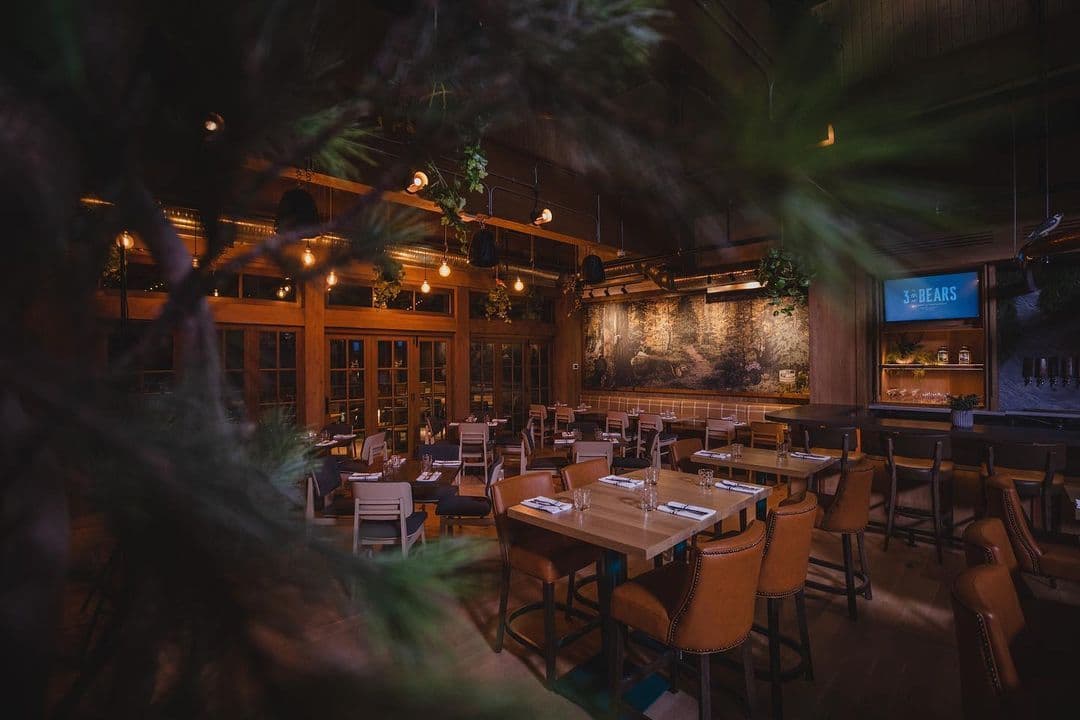

For the complete list of fireplaces, winter patios, current happy hours, and what's pouring tonight, browse Banff Advisor's specials directory — updated daily by the venues themselves.
What to budget for
Winter Banff is cheaper than summer in exactly one category — hotels — and more expensive in one — lift tickets. Figures are approximate and in CAD; check current rates before you book.
- →Hotels: $180–350/night for mid-range from November to mid-December and again mid-February onward. Christmas week and SnowDays push back to summer rates, $350–600+. Book those two windows three months ahead; everything else, three weeks.
- →Lift tickets: Roughly $150–185/adult/day at Sunshine or Lake Louise at the window, date-dependent. Norquay is $149 at the window, $129 booked ahead. Multi-day SkiBig3 passes and advance online purchase save up to about 15%. Norquay night skiing is around $50 — check before you go.
- →Rentals: $40–70/day for a ski or board package in town depending on tier; cheaper by the week.
- →Banff Gondola: Roughly $65–90/adult in winter depending on the date, cheaper booked ahead and lower than summer. Microspikes to walk the Sulphur Mountain trail instead: $15–18 rental, free view.
- →Upper Hot Springs: About $20/adult. Still the best value in the park.
- →Johnston Canyon guided ice walk: $90–110 including transport, helmet, and spikes.
- →Restaurant dinner for two with drinks: $120–180 at a good mid-range spot, same as summer. The difference is that you can get a table.
- →Daily food/drink/incidentals: $120–200 per person per day is realistic. Happy hours run longer and earlier in winter because the venues want you in off the street.
The under-publicized stuff worth doing
- →Norquay night skiing — Friday and Saturday nights, January to March. Under the lights, over the town, and you're at a bar by 10.
- →Fat biking the Legacy Trail — Not groomed end to end, which is the point — though the sections near town have been cleared in recent winters. Rentals in town.
- →The Banff Mountain Film Festival — October 31 – November 8. Nine days of the best adventure films of the year in the room they were made for, and the whole town is in the lobby between screenings.
- →Ice bubbles at Abraham Lake — Two hours north on the David Thompson Highway, outside the park, mid-January to February. Methane bubbles frozen in clear ice. Bring spikes and a windproof everything.
- →Vermilion Lakes at sunrise — Five minutes from town. At the solstice the sun comes up at a very civilized 9:40, and Mount Rundle in alpenglow over a frozen lake is the shot everyone comes for.
- →Cave and Basin — Still cheap, still indoors, still the right call for a –30°C afternoon.
- →Banff Centre winter programming — Concerts, lectures, films. Often free, frequently excellent, and a warm room.
"The best winter days in Banff start at first chair and end at a fireplace by 7. Plan for both ends of the day, and pack for the gap in between."
The one-paragraph winter planning rule
Book the hotel three months out only if you're coming for Christmas week or SnowDays; otherwise three weeks is plenty. Buy lift tickets online before you arrive. Put winter tires on the car or rent one that has them. Pack microspikes, or rent them the morning you get here. Pick one big thing and one small thing per day — the days are short. Eat dinner early, because you'll be hungry by six. Find the fireplace after.
See what's on while you're in town.
Fireplaces, après specials, and tonight's live music — updated daily by the venues themselves.